


Silencing the Lens: The Human Cost of Journalism in Gaza
August 13, 2025 Hour: 2:29 pm
🔗 Comparte este artículo
The Attack on the Media in Gaza
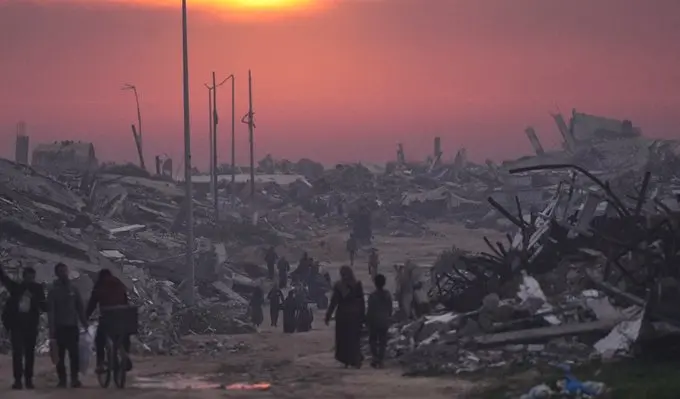
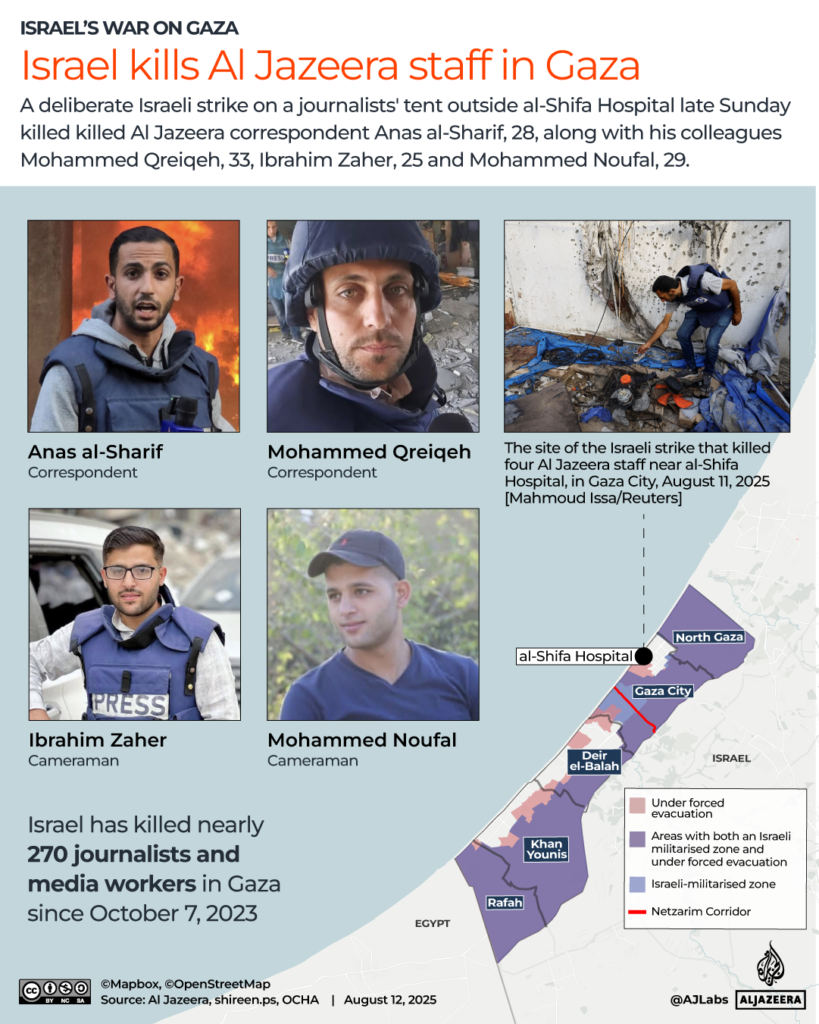
Modern warfare is not only fought on the battlefield but also on the information front. On August 10, 2025, just before midnight, the Gaza Strip became the scene of a tragic and devastating episode when an Israeli military strike killed several journalists and cameramen stationed in a media tent.
Among the victims was the renowned Al Jazeera correspondent Anas Al-Sharif, whose death, alongside that of his colleagues, shocked the international community.
This incident was not isolated but part of a systematic pattern of attacks and violence targeting press workers in the region, a pattern that seeks to silence the voices reporting the harsh reality of the conflict in Gaza.
The killing of Anas Al-Sharif and his colleagues not only represents an immeasurable human loss but also highlights the extreme danger and high cost journalists face in bringing the truth of Gaza’s conflict to the world.
Analysis of the August 10 Attack
According to reports from international media and news agencies, the attack occurred in the late hours of Sunday, August 10, near the main entrance of Al-Shifa Hospital in Gaza.
An Israeli drone struck directly the tent where several Al Jazeera journalists and cameramen were located, including Anas Al-Sharif (28), Mohammed Qreiqeh (33), Ibrahim Zaher (25), and Mohammed Noufal (29). Their names were quickly disseminated by regional press outlets.
Al-Sharif was one of the most prominent and recognized journalists for his continuous coverage of the situation in Gaza for over 20 months. On the day of the attack, they were fulfilling their professional duty by filming the effects of the Israeli siege and violence.
Witnesses and surviving colleagues described the drone’s precision as it struck the group directly. It is well known that journalists often gather near hospitals to access better electricity and internet connections, making these sites frequent locations for media coverage.
Hani Mahmoud, an Al Jazeera correspondent and witness who was just a block away, reported:
“I am not far from Al-Shifa Hospital, and I heard the enormous explosion about half an hour ago near the hospital.”
Those present rushed to aid the victims: Al-Sharif died at the scene, Qreiqeh burned to death before reaching the hospital, and the other colleagues also lost their lives in the attack.
Al Jazeera’s response was immediate and forceful, condemning the attack as a deliberate act against the free press.
Meanwhile, the Israeli military claimed that they had targeted Al-Sharif, accusing him of not being a journalist but an armed Hamas commander posing as one, and further alleging that he coordinated rocket attacks against Israeli civilians and troops.
These accusations have been strongly challenged and rejected by human rights and press freedom organizations, which denounce the complete lack of evidence indicating that the journalists posed any threat.
The Pattern of Killings and Threats Against Journalists in Gaza
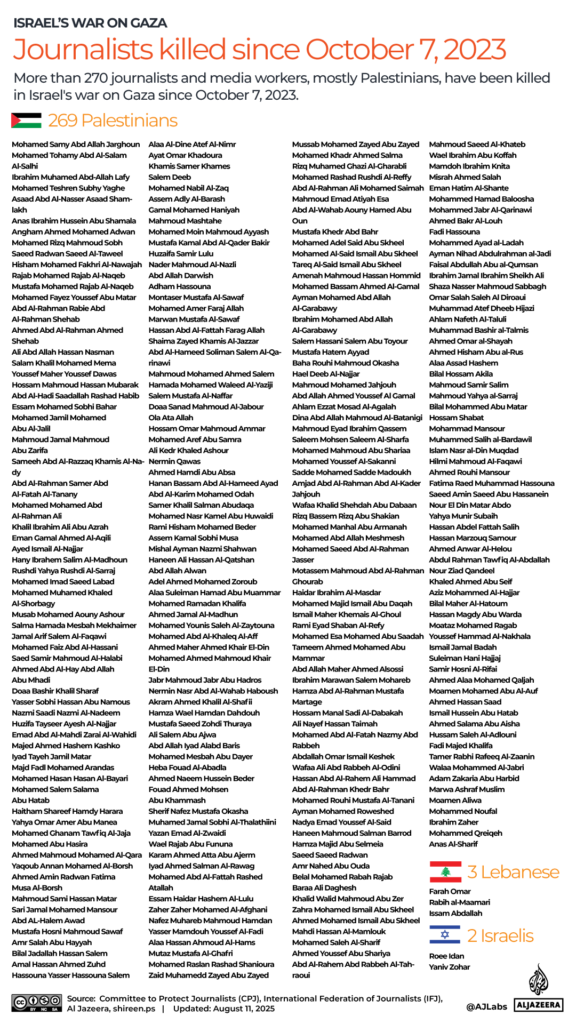
The death of Anas Al-Sharif adds to an already painfully high number of journalists killed in Gaza and the West Bank. This region has become one of the deadliest places for media workers in the world.
Organizations such as the Committee to Protect Journalists (CPJ) and Reporters Without Borders (RSF) have documented around 270 journalist deaths since October 7, 2023, in Gaza alone, averaging 13 fatalities per month in this region.
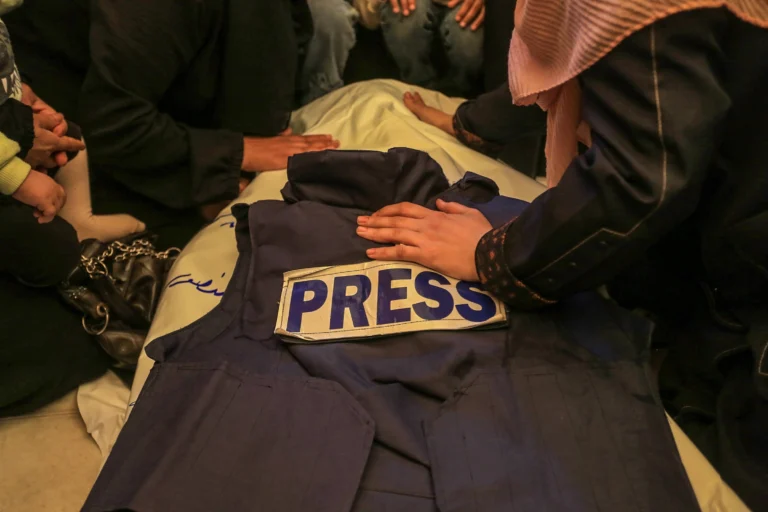
The modus operandi reveals a disturbing pattern: direct attacks on press vehicles clearly marked with “PRESS,” bombings of buildings housing media outlets, and targeted shootings of professionals wearing identifiable press vests.
High-profile cases such as the killing of Shireen Abu Akleh, an Al Jazeera journalist shot dead by Israeli forces in the West Bank in 2022, or the recent case of Hamza Dahdouh, son of Wael Dahdouh and also an Al Jazeera journalist, who died in a missile strike on his vehicle in Khan Younis on January 7, 2024, demonstrate that this violence goes beyond mere tragedy, it is an attempt at intimidation and censorship.
Ethical and Legal Implications of the Killing of Journalists
The killing of journalists in conflict zones is a grave violation of international humanitarian law. Under the Geneva Conventions, journalists are considered civilians and must be granted special protection unless they directly participate in hostilities.
This protection is not a privilege but a legal and ethical obligation for all parties in a conflict.
Silence in the face of these killings and the lack of transparent investigations and accountability foster a culture of impunity that perpetuates violence.
When journalists are silenced, truth becomes the primary victim. The international community relies on these brave professionals for impartial and crucial information, which shapes public opinion and political decisions.
An attack on the press is, in essence, a direct attack on the right to information, a pillar of any democratic society.
The Future of Media Coverage in Gaza
The tragedy of the killing of Anas Al-Sharif and his colleagues on August 10, 2025, transcends Gaza’s borders and prompts an urgent call to denounce and protect journalists. Organizations and media outlets such as the Committee to Protect Journalists, the United Nations, Telesur, Al Mayadeen, and Al Jazeera, as well as various press unions, have condemned this atrocity.
The untenable situation faced by media workers in Gaza not only endangers their lives but also threatens the global ability to understand the complexity of the conflict.
It is imperative that the international community demand thorough and reliable investigations into this and other attacks and pressure for the protection of journalists to be respected and enforced.
The memory of Anas Al-Sharif and all fallen journalists must inspire the defense of press freedom, even in the most dangerous scenarios, reaffirming that the pursuit of truth should not be an act of martyrdom but a right protected and defended at all costs.
Author: Silvana Solano
Source: TeleSur